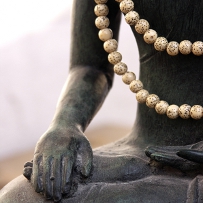
I try to convey that the wisdom and compassion we are looking for is already inside of us. I see practice as learning how to purify our mind and heart so we can hear the Buddha inside. In doing so, we naturally embody the dharma and help awaken that understanding and love in others we meet.
I try to use the formal teachings as a doorway for people to see the truth in themselves. I feel I'm doing my job when people look into themselves to come to their own deep understandings of the truth, access their own inner wisdom and trust in their "Buddha-knowing," as Ajahn Chah called it, which is different from their intellectual knowing.
The Buddha-knowing is a deeper place, underneath the concepts, which is in touch with the truth, with our seed of awakening. I want practitioners to have more and more confidence in, and familiarity with, that deeper place of knowing. It is accessing this dimension of our being that becomes the guide to cutting through the confusion caused by greed and fear. We have everything we need inside ourselves. We do not need to look to a teacher when we remember who we really are.
This talk continues the exploration of how the practice cultivates happiness and joy. Five wholesome states that support true well-being are investigated including practices that help us access them.
The Buddha was called The Happy One. With the emphasis on suffering, its cause and it’s end, we can forget that this path is really a path of cultivating true happiness. In this talk we look at three principles of the teaching that can be the foundation for true well-being and how it can be cultivated both on and off the cushion.
Intention is the basis of all karma. It is also a key aspect of dharma practice, both in moment to moment experience as well as our aspiration, vision that fuels our practice.
The tendency to compare ourselves to others or against some idealized standards is the cause of much suffering. This self-judgement is based on what the Buddha called "the conceit of I am". This talk explores how to work skillfully with the judging and comparing mind.
Intention is the source of all karma. Accessing the sincerity of heart that fuels our practice and inclining it towards freedom is the basis for profound awakening.
Wise Effort is a key issue in Dharma practice. Am I doing enough or too much. This talk explores how to develop balance with regard to effort as well as the classical Four Right Efforts pertaining to wholesome and unwholesome states.
The source of our awakening is right inside us. As we learn to listen deeply to the wisdom and purity of heart that is connected to the truth we are following the Buddha's instructions to be "be a lamp unto yourself."
Developing faith as a quality of heart that is essential for our selves, our practice, and releasing the angst of doubt and the illusion of suffering. What is the place of faith in practice? How can we cultivate faith, trust and confidence? What is faith and how does it work?
Right Effort includes developing and increasing wholesome states by recognizing them or inclining the mind to their development. The four states of loving-kindness, compassion, joy and equanimity can be consciously developed through practice. (Includes experiential exercises.)
Most of our confusion comes from believing the stories, such as personal history and self-image, that run through our mind. Seeing through these stories is the key to freeing the mind and opening the heart to the realization we are much greater than our limiting beliefs.